Fleet management
IT Shortages and Soaring Prices: Refurbished and Remanufactured Emerge as Sustainable Solutions
Faced with component shortages and soaring IT prices, Leasétic offers sustainable alternatives.
Quentin
July 7, 2026

Faced with component shortages and soaring IT prices, Leasétic offers sustainable alternatives.
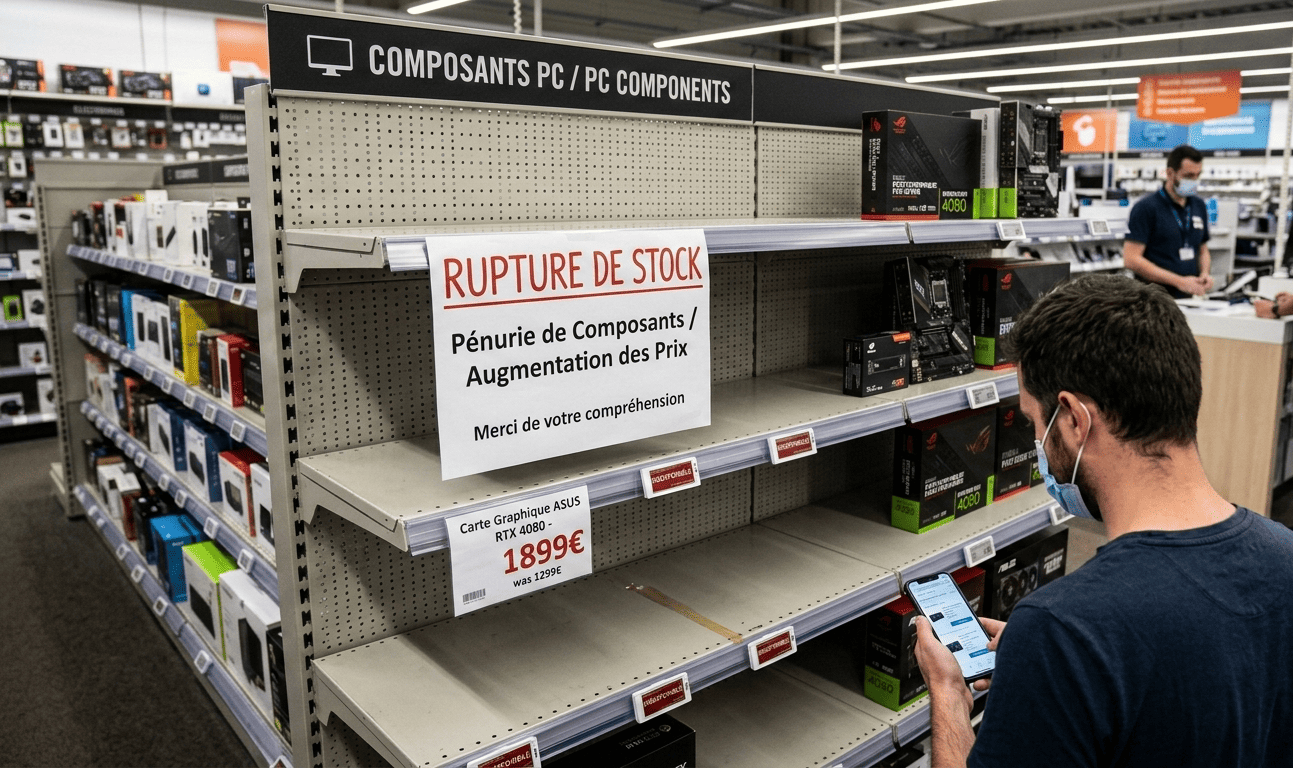
The technology industry is experiencing an unprecedented period of turbulence. Between semiconductor shortages, geopolitical tensions, and exponential demand, the IT sector is facing a structural crisis directly impacting French businesses. Prices for IT equipment have seen a spectacular rise, with increases of up to 50% on certain essential components like RAM. This situation, dubbed "RAMpocalypse" by specialists, is forcing organizations to rethink their hardware acquisition strategy. In this context, refurbished and remanufactured hardware is emerging as a credible and responsible alternative, enabling businesses to maintain performance while controlling costs and environmental impact.
The current electronic component crisis is rooted in a confluence of factors. According to industry analyses, the COVID-19 pandemic triggered a domino effect: widespread remote work, an explosion in demand for digital equipment, and disruptions to global supply chains. Added to this are geopolitical tensions, particularly between the United States and China, which have fragmented production and supply channels.
The rapid rise of artificial intelligence is now leading to a sharp increase in IT hardware prices. AI models require extremely powerful infrastructures, relying on high-performance graphics processors and memory produced by players such as NVIDIA, Samsung Electronics, Micron Technology, and SK Hynix. Given the massive demand from AI-dedicated data centers, these components are preferentially allocated to digital giants, reducing the supply available to businesses and the general public. This tension naturally leads to an increase in the production costs of computers, servers, and IT equipment, which is then passed on to the entire market.
French businesses are bearing the full brunt of this crisis. As industry professionals emphasize, "we can't absorb this alone." French SMEs and mid-sized companies are facing price increases of 30% to 50% on memory components, with delivery times extending over several months.
This situation creates a dilemma: delaying technological investments and risking a loss of competitiveness, or absorbing significant additional costs that weigh on profitability. For many organizations, renewing their IT infrastructure becomes a budgetary headache, especially in an already strained economic climate.
Refurbished hardware refers to used IT equipment that has undergone a rigorous process of inspection, cleaning, repair, and testing. These devices are restored to optimal functional condition and typically come with a warranty.
Remanufactured goes even further: it's an industrial process where equipment is completely disassembled, its components individually tested, defective parts replaced with new ones, and the whole unit reassembled according to strict quality standards. The final result offers performance comparable to new, with an extended lifespan.
In the face of soaring new equipment prices, refurbished and remanufactured hardware represents substantial savings, potentially reaching 30% to 70% depending on the equipment. For a company renewing its fleet of 50 workstations, this can represent tens of thousands of euros in savings.
Beyond the purchase price, these solutions offer:
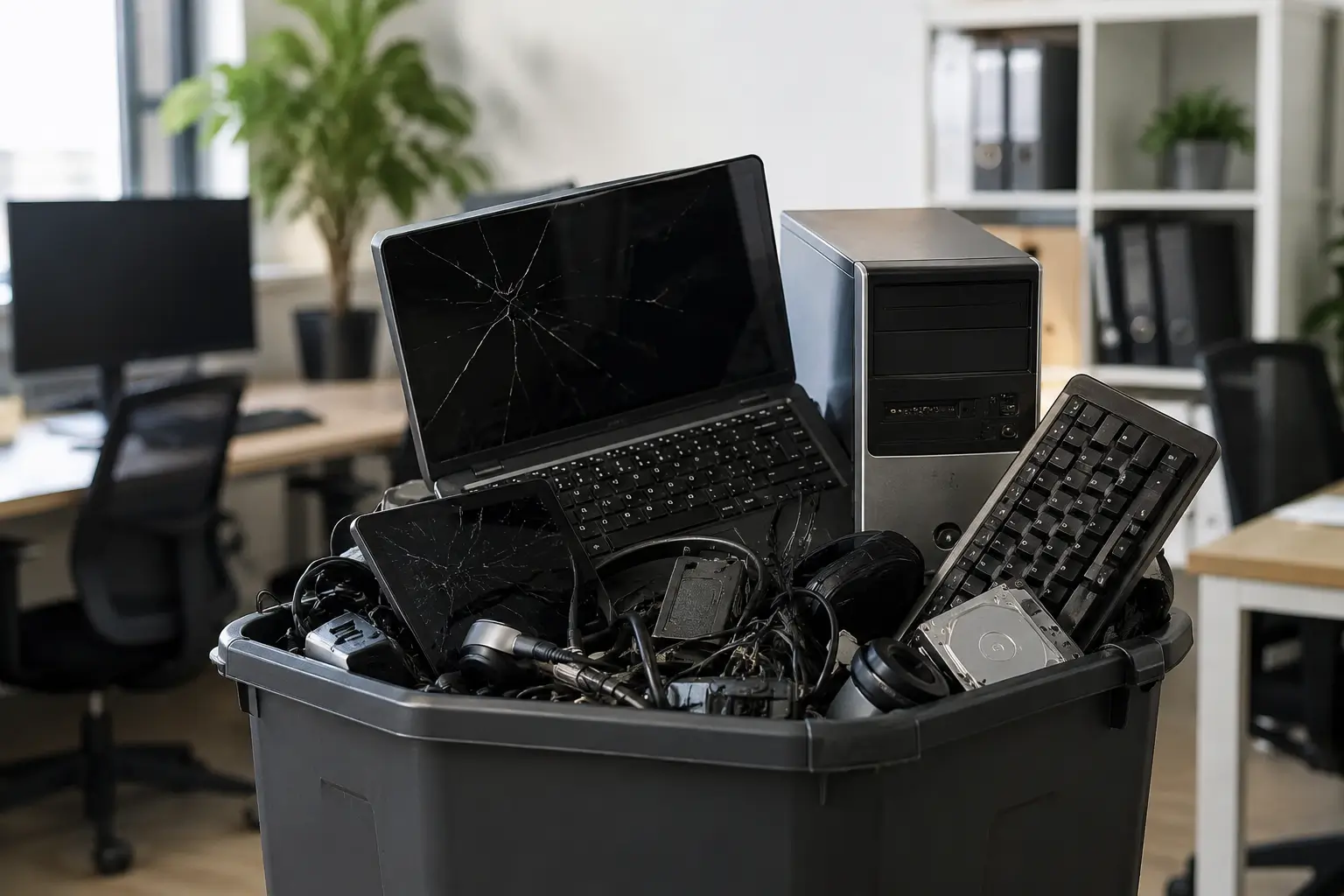
Choosing refurbished or remanufactured equipment means embracing a concrete circular economy approach. The electronics industry is one of the most energy-intensive and polluting sectors on the planet. Manufacturing a new computer requires:
By opting for refurbished equipment, companies avoid these environmental impacts while extending the lifespan of existing equipment. This is a direct contribution to reducing electronic waste (WEEE), which represents one of the fastest-growing waste streams globally.
Leasétic offers an innovative approach that combines the benefits of refurbished and remanufactured equipment with the flexibility of operational leasing. This solution allows companies to:
Preserve their cash flow : no significant upfront investment, predictable monthly payments that easily fit into operating budgets.
Stay at the forefront of technology : ability to regularly renew IT equipment without tying up capital, while benefiting from high-performance and reliable equipment.
Outsource lifecycle management : from equipment selection to its return at the end of the contract, Leasétic supports companies through all stages.
Leasétic makes no compromises on quality. All equipment offered undergoes a rigorous certification process including:
This commitment to quality enables businesses to benefit from reliable equipment with an optimal lifespan, while achieving substantial savings compared to new equipment.
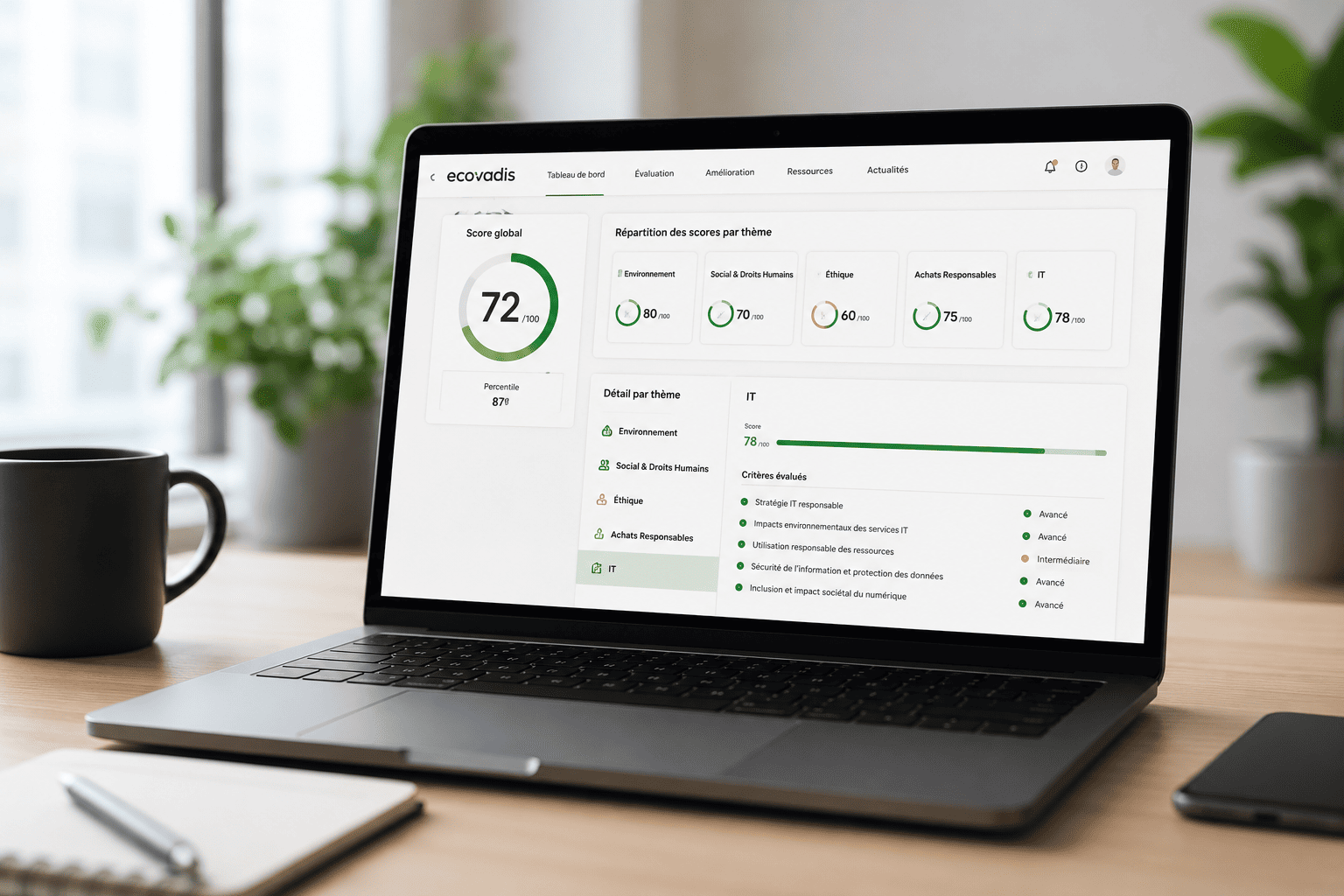
ESG (Environmental, Social, and Governance) criteria are becoming increasingly important in company evaluations. Opting for refurbished equipment through Leasétic allows organizations to:
Industry experts anticipate that tensions in IT component supply could persist until 2026, or even beyond. Massive investments in new production capacities take time to materialize, while demand continues to grow, driven by AI, IoT, and digital transformation.
In this context, waiting for prices and availability to return to normal would be a risky strategy. Companies that anticipate and diversify their supply sources, particularly by incorporating refurbished and remanufactured equipment, are well-positioned to navigate this period of uncertainty.
To effectively navigate this new environment, companies must adopt a strategic approach to their IT infrastructure:
Audit and planning : precisely assess actual needs, identify critical equipment and that which can be replaced with refurbished alternatives.
Smart Mix : combining new and refurbished based on usage, reserving new for the most demanding applications and prioritizing refurbished for standard uses.
Trusted Partnerships : relying on specialized partners like Leasétic to secure supplies and benefit from sector-specific expertise.
Long-term Vision : integrating the environmental dimension into purchasing decisions, not as a constraint but as a lever for differentiation and optimization.
The current IT market crisis, marked by persistent shortages and soaring prices, is forcing companies to rethink their equipment strategies. Far from being a mere palliative, refurbished and remanufactured hardware is emerging as a sustainable solution, combining economic performance, technical reliability, and environmental responsibility.
With its leasing expertise and rigorous selection of refurbished and remanufactured equipment, Leasétic supports companies in this transition. The proposed offering allows for reconciling budget control, operational continuity, and CSR commitment—three imperatives that are now inseparable for modern organizations.
Given market uncertainties and the prospect of prolonged tensions until 2026, adopting an approach that includes refurbished and remanufactured equipment today demonstrates foresight and pragmatism. It also actively contributes to a more circular and sustainable economy, while preserving your company's competitiveness.