Ecological transition
The carbon footprint of emails: myth or real environmental challenge?
Emails do pollute, but not always in the way people think. Discover the real issues.

Sophie Fruleux
November 12, 2026

Emails do pollute, but not always in the way people think. Discover the real issues.
In an all-digital era, emails are everywhere in our working lives. Yet few people realize their environmental impact.
According to ADEME (the French Agency for Ecological Transition), an email without an attachment emits an average of 4 g of CO₂, while an email with a large attachment can reach up to 50 g of CO₂. These emissions come mainly from:
However, it is essential to put this impact into perspective. Storing and sending emails accounts for only about 1% of total digital emissions, and digital itself is responsible for 4% of global greenhouse gas emissions. A structural problem linked to our digital habits While the carbon footprint of a single email is small, it is the astronomical volume of messages exchanged every day that poses a real problem. More than 300 billion emails are sent every day, of which around 85% are spam (source: Mailinblack). This overload needlessly strains digital infrastructure and contributes to continuous energy consumption.
Many people believe that by regularly deleting their emails, they are reducing their carbon footprint. In reality, this action has a virtually zero impact on overall emissions.
The reasons are simple:
The real lever for action is therefore not deleting emails, but managing our digital habits more responsibly.
Rather than frantically deleting emails, it is better to adopt good digital practices to limit environmental impact. Here are some concrete solutions:
Receiving unread emails needlessly consumes resources. By unsubscribing from newsletters you do not read, you reduce the number of emails sent and stored.
Before sending an email, ask yourself: is it really necessary to copy everyone in? The more recipients there are, the larger the carbon footprint.
Rather than sending files as attachments, use links to a secure cloud. Not only does this reduce the size of emails, it also lightens the load on servers.
For quick exchanges, tools such as Teams, Slack, WhatsApp or Signal are often more appropriate than an email and consume less energy.
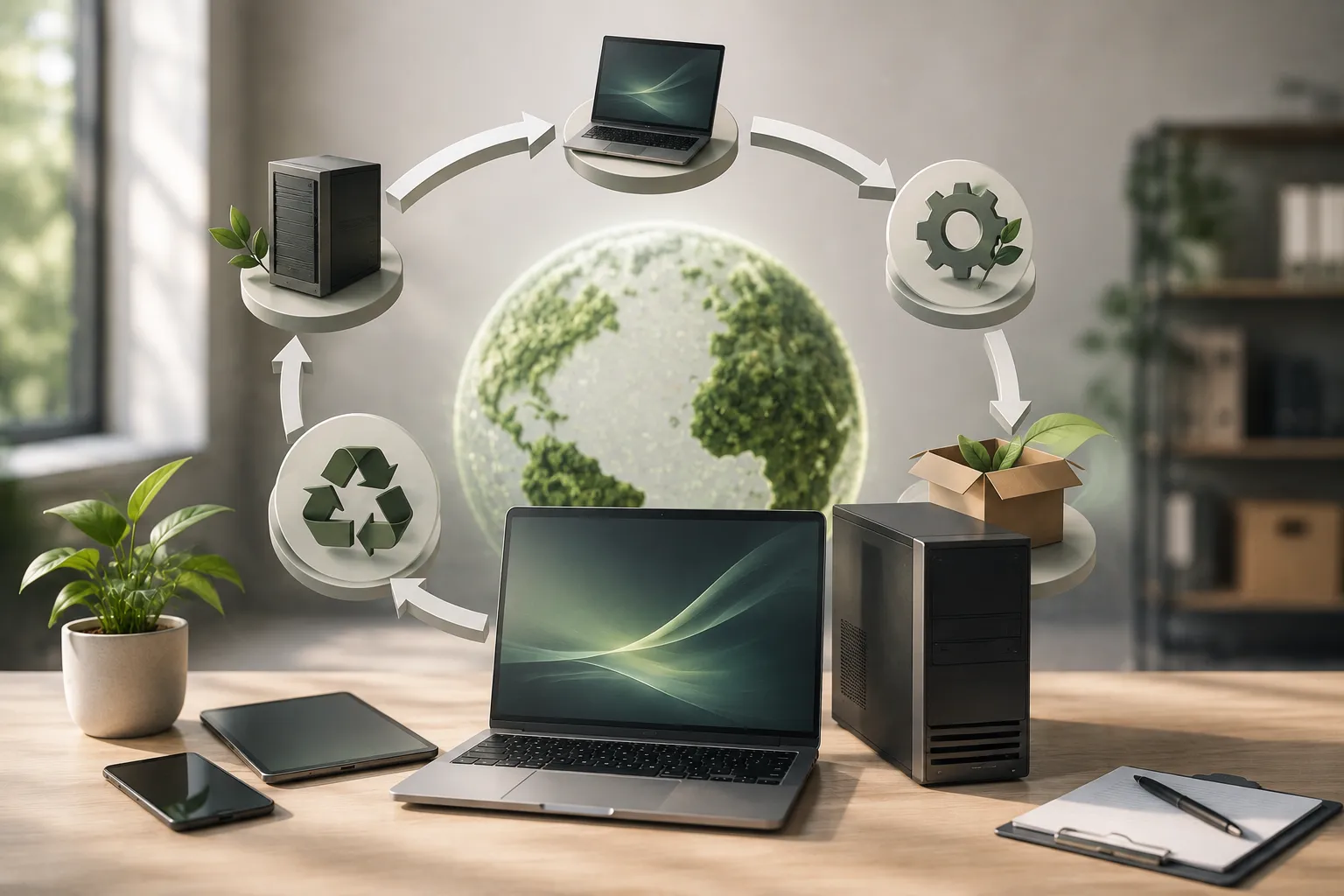
An obsolete workstation consumes more energy and needlessly increases the carbon footprint of digital use. Choosing sustainable IT equipment management through leasing makes it possible to renew your IT fleet with more eco-responsible equipment, while reducing costs and environmental impact.
At Leasetic, we help companies reduce their digital carbon footprint with tailored solutions:
Responsible digital is above all about better management of equipment and usage. Want to optimize your IT fleet while keeping your budget and carbon footprint under control? Contact our Leasetic experts today! With this approach, you not only take concrete steps to reduce the impact of your digital use, but also commit your company to an eco-responsible and sustainable approach.
Aller plus loin
Leasing par secteur : télécoms, médical, industriel, audiovisuel
Go further
Leasing by sector: telecoms, medical, industrial, audiovisual
Para saber más
Renting por sector: telecomunicaciones, médico, industrial, audiovisual