
Fleet management
The information system: performance, environmental responsibility and the key role of the CIO
Balancing IS performance with a lower carbon footprint: a strategic challenge for today's CIO.

Sophie Fruleux
November 12, 2026

Balancing IS performance with a lower carbon footprint: a strategic challenge for today's CIO.
The information system (IS) now plays a central role in companies' strategy and competitiveness. It drives operations, innovation and decision-making. But this technological power comes at a significant environmental cost: according to ADEME (the French Agency for Ecological Transition), digital technology already accounts for an estimated 4% of global greenhouse gas emissions, and this share could grow exponentially in the coming years if no action is taken.
In light of this, companies are being called on to rethink their IS so that it remains high-performing while reducing its environmental impact. This means optimizing not only applications and data flows, but also managing the hardware fleet with a responsible life cycle approach.
Performance is no longer limited to technical indicators. It now includes sustainability criteria such as extending equipment life, using refurbished equipment and optimizing the energy efficiency of data centers.
These practices make it possible to:
Leasing and circular economy solutions are thus becoming strategic levers to combine performance and sobriety.

Long focused on technical and security matters, the CIO (Chief Information Officer) is now positioning themselves as a strategic partner to executive management. They are at the heart of digital transformation projects, but also of CSR commitments. The CIO must therefore demonstrate agility, business vision and environmental awareness. Their role now extends to the governance of IT assets from a sustainability perspective.
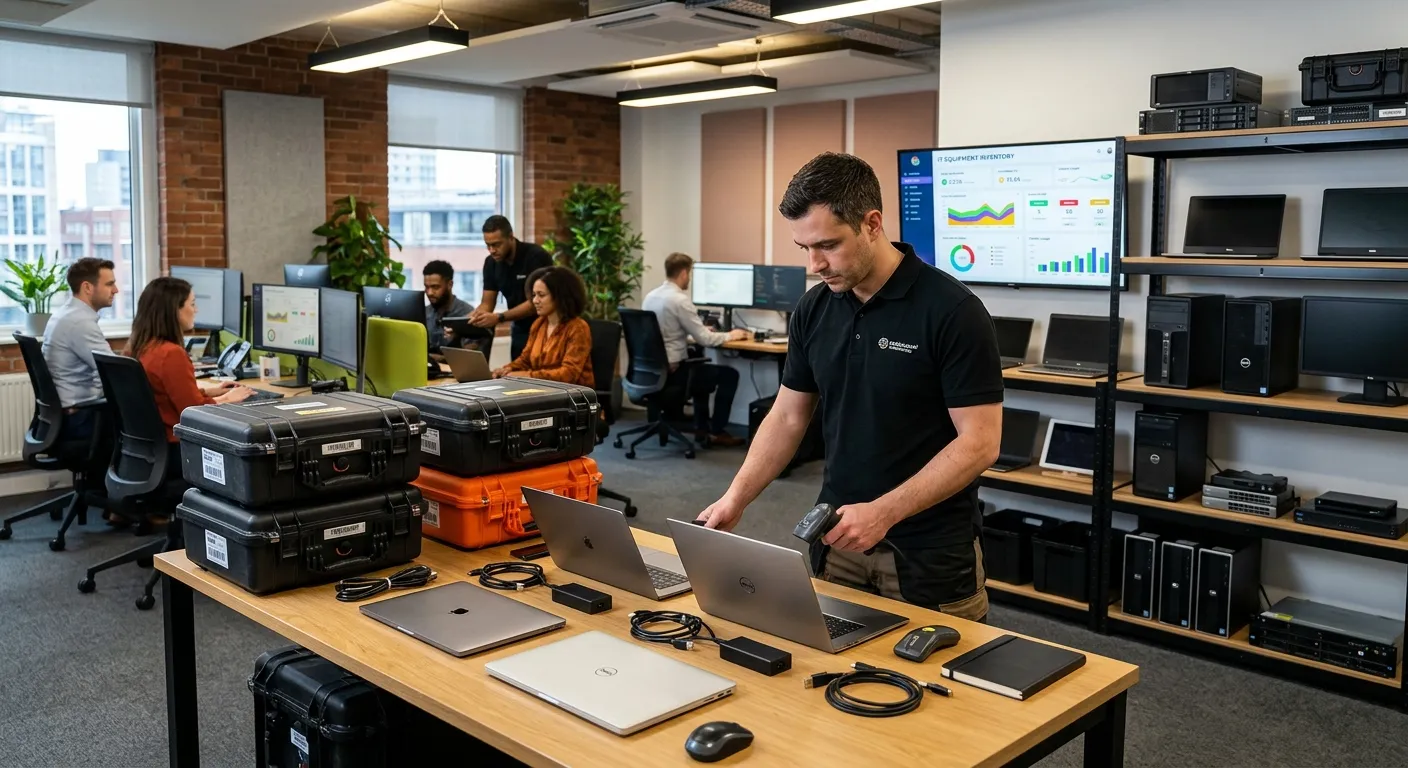
In practice, the CIO becomes responsible for the optimized management of the IT fleet, from acquisition to the recovery of equipment. This involves:
In this way, the CIO combines budget control, operational performance and a reduced environmental footprint for the IS.
"You can only improve what you measure": this maxim takes on its full meaning in the eco-responsible management of information systems. Companies are increasingly adopting measurement tools to quantify the carbon footprint of their information system. This involves energy consumption audits, calculations of equipment-related emissions and standardized Green IT indicators.
According to an analysis published by the French government's "Numérique éco-responsable" (eco-responsible digital) website, this approach makes it possible to:
This fact-based approach gives the CIO the means to convince and to act. It turns digital sobriety into a company-wide project rather than a mere technical constraint.
The experts at Leasetic and its partner Colibris help companies build a high-performing and responsible IS. With tailor-made solutions for financing, fleet management and equipment recovery, we help CIOs and executive teams reconcile innovation, cost control and a lower carbon footprint. Contact us to discuss your challenges together.
To learn more, explore our overview of digital sobriety for IT departments.
Aller plus loin
Leasing par secteur : télécoms, médical, industriel, audiovisuel
Go further
Leasing by sector: telecoms, medical, industrial, audiovisual
Para saber más
Renting por sector: telecomunicaciones, médico, industrial, audiovisual